Tuesday, March 31, 2009

Long Time Gone: Trading the countryside for urbane Ulaanbaatar

It was a long month in UB, but we're back in Bayankhongor now. Though we got a lot done while we were away and enjoyed lots of great food, fun company, and regular hot showers, it has been so good to be home.

Leslie
The initial purpose of our trip to Ulaanbaatar was for me to lead several trainings on music therapy, specifically for social workers and social work students. I was asked in January to create a training for social workers with Save the Children. It was very successful, greatly due to my Peace Corps CYD director, Enkhee, who has social work degrees from the U.S. and is capable of maneuvering the complicated subject of music therapy from the English language to Mongolian. At the Save the Children workshop, I was asked to return for a follow-up with the social workers and also to present a 20 hour workshop with the seniors at the Mongolian State University of Education Social Work program.
Though only one of those workshops worked out, due to scheduling issues with the Save the Children social workers, I was able to have a successful week with the students at the university!

Enkhee spent a couple mornings translating for the first workshop, but it was impossible to get her away for 20 hours with the students. Thanks to a previous volunteer, we met a remarkable woman named Tuul Sukhbaatar! Sukhbaatar means Axe Hero! (and the same guy the town we trained in and the Square in UB is named after) in Mongolian. You can imagine how hard core that makes her! I was lucky that she was willing to take her vacation time to help me out. Much like working with Enhkee, it was really easy to work with someone I adore so much.

*Note: Tuul will be starting her masters degree in conservation in the United States this fall! This, of course, means that I will connecting her with many of you! She's a blast! I'm glad she'll still be there when we are finished in Mongolia!

I did my best to make it an extremely experiential week for the students, so Tuul and I worked with the social work students on lyric analysis, musical biographies, song re-creations, and music relaxation. The students lead several experiences during the week! The next week Enkhee told me that when she met with the students they were very excited to share with her all they had learned.

The next step I would like to do on this project is to re-create similar workshops throughout the country, since training in the countryside (not UB) does not happen as often. In addition, a fellow PCV, Julia, would like to lead some experiences on drama therapy. Currently, the Center Against Violence has expressed an interest in our workshop for the social workers that work at the Women's Shelters in the provincial capitals!

If you want to know more about how music therapy may work in Mongolia check out Voices in May. Voices, the online World Forum for Music Therapy, has agreed to make Mongolia the country of the month in May. I will be writing the article on the history of music here and how, though there are no creative arts therapists in Mongolia it is primed for use of creative arts in therapy and social work. I'm thrilled for my first published article.


Nathan
While Leslie was doing her seminars, I was working on an internet project for my NGO, which is about half way done, but we need a lot of translation into English before it goes up. I can't wait to unveil it when it's done.

In the interest of setting up some sort of micro-financing partnership, I met with a guy from www.kiva.org. They have access to money and a partnership with a bank my NGO has already partnered with to give out micro loans, but they don't have a lot of vetted candidates to loan to. We have a ton of suitable recipients with no access to money. It seems we should be able to work something out. Lots of hoops to jump through first. We're hoping we'll be able to get Brother-in-law Stephen's Kiva credits our way.

Originally, I was only supposed to be in town for about three days while Leslie stayed to work. By the time we got back into UB from visiting our host families for Tsagaan Sar, though, we had both been pretty sick for almost two weeks. We got some antibiotics that didn't do the whole job, then I got some chest x-rays to rule TB, then we were both put back on another, longer round of antibiotics, which seem to have done the job. Also, because of the unexpectedly long stay, I only had about three outfits, so my clothes took a beating.

I was around a little longer than planned, but serendipitously, I was working for my NGO at the UB headquarters during a time when they were having some big discussions about an EU grant, and I eventually helped write parts of it. They kept me in town for an extra 10 days to help see it through. We're just in the beginning of the vetting process, so if it materializes, I'll elaborate on it more then, but potentially, it would invest in infrastructure and technical skills training for rural arts and peer-to-peer life skills education using Leslie's children's theater over three years. Leslie and I both had a lot of input, so fingers crossed for it to make it to the next stage. My programs director and country director at ADRA (a married Australian couple) are a real whizzes at the writing and planning, so even if it doesn't materialize, I at least got a lot out of the process.

I also found out that I was chosen to do training for the incoming volunteers. We'll be expecting them in 2 months, which surprisingly means we've been here 10 full months now. It will take me out of site again for 4-5 weeks during the summer and a weekend of training in May. No definite word on Leslie yet, but we both feel it's a done deal that she'll be training as well, as per her director Enkhee's recommendation. There have been a ton of budget cuts forcing the training to be much different than we experienced, so we're wondering how its all going to go down.

We grabbed some urban-themed photos from UB. These are mostly taken around Sukhbaatar Square, what may be considered the center of town. You can see the difference between UB and our countryside Bayankhongor, namely the big buildings and lots of cars. You might see in one shot that someone hates Chinese people enough to graffiti it in English. (My money is on Zero, the online handle of my buddy John. John, there are better ways.) You might also see there's a wall with the Beatles on it in front of a billboard advertising fresh milk. Imagine.


A Night at the Opera
On Saturday night went to the opera to see Tosca. We brushed up on the story beforehand on the internet, though the programs (in English and Mongolian) had the same synopsis. Most of the arias were in Italian (except for one male lead who sang only in Mongolian) and the recitative was in Mongolian (except for the female lead, who sang only in Italian), though it was kind of hard to tell the difference. 1 of the male leads was just so awful it was nearly incomprehensible, but the other male lead and the female lead held their own. The costuming was beautiful and had a Mongolian flair to it especially in the sacristan's robe, which was was worn more like cinched and bloused Mongolian deel at the waist than a hanging monks' robe. The same guy wore a bald
cap and a big prostetic nose. It was a hoot.
The star of the night was the opera house itself. It reminded us of Stuart's Opera House in Nelsonville, Ohio where we've performed. It was a quaint, small auditorium with about 400 seats and the interior was adorned with beautiful colors, traditional Mongolian designs, and charming lighting. The performers weren't amplified at all, and it was a treat to hear the pure voices with the orchestra, which sadly was often too heavy and/or out of tune, owing many troubles to the low brass and clarinet. Even still, the seats were cheap at 8,000MNT ($5.33) and we got our money's worth.


The last month flew right off the calendar, and there's no letting up for now. As fun as our time was, it was not a vacation. After the hiatus from a comfortable bed and the 14 hour, punishing bus ride home, we are worn out. Also, even with per diem and help from Nathan's father, UB has so many good options for food and entertainment that our pockets are pretty bare. It should be a lean month ahead.

Monday, March 23, 2009

Our Love Song

During our swearing in ceremony in August, each training community had to perform a traditional song, dance, instrument and give a speech. We sang a duet for our teachers and fellow PCVs.

As promised months ago, check out our video on youtube.

Monday, March 2, 2009

Tsagaan Sar: Enter the Year of the Ox

Tsagaan Sar has so far been one of best experiences we've had in Mongolia. We were wined and dined all over town. We ate hundreds of buuz and bainsh and drank gallons a various beverages. We've met some wonderful new people and hopefully affirmed some lasting bonds with others.

If you like the photos you see here, we have a lot more with some detailed captions you can check out here. For more information on the holiday, check out our other blog post, Tsagaan Sar: We see a White Moon a risin'.

Day 1.
Nathan went to the top of the Erdenemandel mountain in the middle of town to greet the first rays of the new sun on the first day of the Lunar New Year. The irony of appreciating the sun on a lunar holiday was not lost on us, but Nathan got to the top just as the sun broke over the Ikh Nomgon mountain on the eastern side of the city.
Later that day, we went with Tysen to our friends' house. The father and daughter are high school English teachers at different schools and the mother is a retired economist who owns a small restaurant now. As per the custom, we dressed up in our Mongolian best, said our Tsagaan Sar greetings "Amar bain uu?", shared our snuff bottles, ate lots of food, drink and sweets, and recieved a gift for coming.


Later after a nap and a movie, Nathan's driver Choka and his co-worker Undrah picked us up. We went first to Choka's palatial western-style, two story house and met his family with our "Amar bain uu?"s and snuff bottles. His wife and son (who looks just like him) are a real fun sort and she made some really tasty buuz. We posed for a group picture, then moved on to Undrah's. At Undrah's ger, we did the same. A pattern was developing.


Day 2.
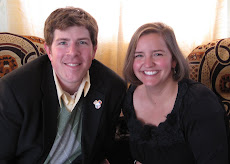
Nathan's new friend and English student, Bayanmunk, had us over. He's a high-school physics teacher and since his wife, Tunga, is an important judge, they've moved around a little bit for her job. As a result, they don't really have family in the area, which is good because we were able to spend most of the day being gorged by their "American-style" pasta, mutton, candy bars, Coca-Cola, cherries, strwaberries, steamed yeast bread, beef, etc, etc, etc. We were also treated to an intorduction to the head prosecuter in town who paused for a few minutes to chat on his two-way with the chief of police.


Day 3.
After our glutinous good time on Day 2, we didn't know just how much more we were up for. Day 3 is typically the day to spend with co-workers and we'd had loose plans with Leslie's, but we had no clue when or where. It's OK, because Leslie's co-worker Dogoo gave us 3 minutes warning that she was in a car on her way. We dressed, she drove and thus began another marathon day of mutton, buuz, milk products, candy and fun!

We must have gone to ten different houses that day. As required, we did our best to eat our three buuz and politely sip our generous portions of several different beverages. We had some real fancy-pants buuz at some places that even included hot peppers. What a treat and what a surpise, but yhey are theater folk, after all.


Day 4.
We spent with our new friend Demo and his family. He's a 21 year-old first year English teacher. His parents are both doctors, his one sister is a dentist, and his other sister is a college student. His parents told us over and over again their's was a family of doctors, reminding us frequently that Demo was not a docter, he was a teacher and translator. We had a really fun time with them, but neglected to take a picture.

Afterwards, they arranged a car ride to Nathan's other counterpart's house for a quick stop for some tea, milk products, vodka and meat. Again, as with each place we went, we exchanged our "Amar bain uu's?", snuff bottles and other pleasantries.

After that, we arranged another ride to the home of Tserensuren who runs a program for children with special needs, and with whom Leslie has been working with recently. Her son is deaf, among other limitations. Since there were no real resources for children like him, Tserensuren started a program at the hospital and worked closely with another PCV who recently returned to the States. They have a good thing going and it was good to share some time in her home. We're likely not to make it back too often because it is for real on the edge, edge of town. Without a ride, it would have taken about an hour to walk.

So, we finally got through the first few official days of Tsagaan Sar, though we were the worse for wear. It seems all the communal eating and drinking and lack of sleep over the past 5 days caught up with our bodies, and we have both been under the weather with a wicked throat and chest cold.

We were supposed to leave for Sukhbaatar on that Sunday, but the Russian van we booked the day before was greedily overbooked when we went to leave. We chose to let our sitemate Peder take the last remaining seat and went home. When we awoke the next day and tried to leave, we were just too completely worn out. We opted not to travel for a couple more days and this time we bought bus tickets, which had been sold out before. Bus tickets are cheaper than a crammed van and cost less.

Now we're in UB after a few days hanging with our host familes and our American friends in Sukhbaatar. We're still sick, both with the same nasty, nasty cough, but after meeting with our medical officer, we have some more agressive treatment than our gargling salt water, drinking tea, and popping pain pills. He says our cough is most likely pollution related.

Sunday, February 22, 2009

Tsagaan Sar: We see a White Moon a risin'

The very important Lunar New Year celebration is upon us this coming week - Tsagaan Sar.

Though technically there's only a few days of formal celebration of the holiday, we're told the festivities can last much longer, even weeks, and that it's hard to accomplish much during that time. We look forward to experiencing our first Tsagaan Sar in Bayankhongor with friends and colleagues who have already extended invitations over three days, and then make a trip to the other side of the country to celebrate with our host families.

Unlike the Christmasy New Year celebrations Mongolians hold on January 1 as a Communist leftover, this holiday helps Mongolians re-tap their herder roots with traditional dress, food and greetings.

To help explain more about what and when it is, we have specially edited materials from our lovely and helpful Peace Corps language coordinator, Ganaa. Read on.


Part I. What is the Tsagaan Sar?

The new year according to the Oriental lunar calendar in Mongolia is called Tsagaan Sar, which translates as the "White Month" or "White Moon." There are many opinions about the origin of the name, but Mongolians use white to symbolize happiness, purity and an abundance of milk products.

Some researchers believe that the lunar calendar was invented by the nomadic tribes of Central Asia and a number of Eastern and Central Asian countries, including Mongolia, have followed the lunar calendar since ancient times. The calendar consists of 12 years with 12 months in a year and 12 hours in a day. The years bear the names of animals, like the upcoming Year of the Cow, and Mongolians judge the coming year by the animal name it bears.

1. The Year of the Mouse promises good livestock productivity, especially in camels.
2. It snows heavily in the Year of the Cow and there is plenty of food and milk.
3. The Year of the Tiger is rather hard at the end.
4. The Year of the Hare is favorable at the beginning and spells disasters at the end.
5. The Year of the Dragon is rainy and floods may occur.
6. The Year of the Snake brings many disruptions and worries.
7. The Year of the Horse is also rather disturbing,
8. but the Year of the Sheep that follows it is favorable in all respects.
9. The Year of the Monkey, although cold and troublesome, brings in a bumper harvest.
10. The Year of the Cock is one of fertility and higher birth rate.
11. The Year of the Dog is severe at the beginning and kind towards the end.
12. The concluding Year of the Pig promises rich harvests, yet food shortages, should they occur, will hit hard.

Nowadays there is an argument among Mongolian astrologers about the celebration date of Tsagaan Sar because depending on the phases of the moon and the calendar used, it falls anywhere between the end of January and early March. Some say we should follow the lunar calendar invented by Tibetans, while others prefer to follow the one used by the Chinese. Either way, this year's Tsagaan Sar will be celebrated on the 25th or 26th of February. [Most people will celebrate on the 25th.]

New Year’s Eve in Mongolia is called “Bituun” - the last dinner of the old year. One must eat all the traditional dishes that evening: boiled lamb or beef, a huge variety of milk products, buuz or bansh (large or small meat and fat-filled steamed dumplings) and desserts. Many families have the tradition of placing coins inside the buuz/bansh and whoever bites into the one with the coins will have good luck. At the end of the evening, everyone’s stomach is fully satisfied.

The following morning everyone rises bright and early to walk outside of their house in the correct direction, which is indicated in their horoscope of the year. This symbolizes that the destiny of each person is directed correctly for the upcoming year. Then family members then gather around the eldest in the family and greet each other by wishing him a very happy new year.


Part II. Tsagaan Sar Celebration Customs

At sunrise of the new day, hosts and his guests dress in new dells and greet each other in a special manner. First, the youngest greets the eldest as the older person holding out his/her arms. The elder puts his hands palms down on the arms of the younger one and both pronounce traditional good wishes and rub cheeks while the older person sniffs on either side of the face, which is considered the Mongolian traditional “kiss”. Even if new year celebrations are over, friends and relatives meeting for the first time that year greet each other in this manner. [Nathan witnessed this in July when host family members visited from far away for the first time that year.]

In towns and cities, Tsagaan Sar is celebrated for 1-3 days and in the countryside villages, the reveling continues for about a week or more. Guests may come and go at any time of the day and families serve guests with plenty of meals: buuz/bansh, salads, vodka, etc. Families also give small gifts to their guests.

Traditions and customs are different from place to place and from family to family. Even for Mongolians, it is impossible to follow every tradition, but by observing and practicing you can learn a lot.

General tips during Tsagaan Sar:
  • When visiting, greet the oldest member of the family first
  • When you greet the eldest, give a small amount of 500-1000 tugriks to them depending on your site custom. Some places don’t do that.
  • Dress nicely. Mongolians like to greet the new year by making everything new, so many people buy or sew new dells (traditional long robes with a contrasting cloth or leather belts).
  • During Tsagaan Sar, people visit many families in one day. If you are going to many families, save room to eat 2-3 buuz with each family. It is polite to taste everything (start with white food), candy, cakes, meat, salads, whatever, but just a little bit. If you are a strict vegetarian, it is OK to say “Bi makh iddegui.” (I don’t eat meat at all).
  • When offered vodka or airag (fermented mare's milk) and you wish not to drink it, accept it and simply bring it to your lips then return it.
  • When you have visitors, the best thing to do is to keep your pot full of hot water and have tea ready. Candy/cookies are always good to offer. You do not need to prepare an elaborate meal; this should not be expected of you.
  • When someone gives a gift to you, receive it with both hands and DON’T put it on the floor.
We hope this gives you a good idea what we'll experience in the coming week. We look forward to reporting back on how it went.

Thursday, February 19, 2009

Who's On My Valentine?

On Thursday, just before Valentine's Day, we got a package from my mother filled with Hershey's Kisses, various small candy bars, heart-shaped candy and little Disney themed Valentines.

Thursday night, we wrote the names of our counterparts on the one side, our names on the other, and sealed them with a cute little heart sticker.

When I got to work on Friday, I took out the bag of Hershey's Kisses and began handing them out with the cards to my 6 counterparts, who wore general looks of interested confusion. My supervisors, who speak English, were in town from UB, so I said in English, "Do you guys celebrate Valentine's Day?"

Then the mood changed as the ones who speak English became giddy and quickly filled in the rest. Everyone who was busy clacking on computers and yacking on cell phones stopped what they were doing to get a better look at what was going on.

I explained to them that the cards I gave them generally used to end up in the homemade decorated shoe boxes, cylindrical cardboard oatmeal containers and modified bags of every elementary school child when I was growing up. Most of the fun of Valentine's Day was making the boxes and trying make sure I wrote down the names of every classmate, especially the cutest girls, so that everyone had a Valentine.

Though Mongolians know Mickey Mouse, my favorite part of giving the cards to my counterparts was explaining the Disney character, Minnie Mouse. It was no sweat in English, but in Mongolian, it was hysterical. The word for "my" in Mongolian is "minii", pronounced just like Mickey's tart, high-heeled love interest, but with the emphasis on the second syllable.

So, in our perfect Abbott and Costello, Who's On First banter, I asked one counterpart if she knew who the character.

"Your mouse? I thought you were giving it to me," my counterpart said.

"No, her name is Minnie Mouse."

"So, I can keep it. It's my card?"

"Yes, it's yours, but her name is Minnie," I insisted and so on until we agreed that it was not my mouse, her name is Enkhee, and the name of the character was Minnie.

Some other things I hadn't thought about were the sentiments on the cards and on the special edition Valentine's Kisses of "be mine", "I'm yours" and "I'm there for you", etc. They were really hard to translate because they're so corny and some of the meaning is lost, so I wasn't sure they really got the whole meaning, but they were appreciative nonetheless.

I learned that some Mongolians do celebrate Valentine's Day and almost everyone I talked to knew about it, but it's limited to a lover's evening sort of deal that some people celebrate with flowers and candy. It's not the forced, empty affection ritual we enjoyed as kids with little cards and chalky candies. Leslie and I personally didn't do anything special other than scarfing the chocolates with our friends and denting a huge bag of mixed nuts that also made its way into the care package.

Thanks to my mom for a fun little culture exchange.

Friday, February 13, 2009

Random Mongolian Lessons of the Day

How do you run a Mongolian New Year's Party? What's the perfect background music for a Teacher's Day Toast? What's still considered an OK amount of time to wait in your theater seat before the show starts?

Check out this page for answers to those questions and more. You never know what you might learn.

We've been texting our friend Travis, a soft-spoken, Southern gentleman who trained with Leslie. He's a health volunteer who lives on the other side of the country now. It was his idea to headline a text message "RMLD:" then tell of some crazy new story or situation we could all relate to. We've we've been enjoying these messages back-and-forth since August and some are lost to history now, but Travis recently put up a Web page so we keep better track of our lessons.

Periodically check out this link for new lessons a laugh.

Wednesday, February 11, 2009

Oyuntugs Leads Us to New Heights (and one low caught on video)

Our friend Oyuntugs [pr. Oy-un-toogs], the English teacher counterpart of our site mate Tysen, is from Bayankhongor but has a degree in tourism from a university in UB. She's in her early to mid-twenties and moved back to Bayankhongor last summer to look after her aging parents - as is her duty as the youngest child, though other siblings lived in Bayankhongor already.

To stretch her tour guide legs while she's out of the game, she started a class at the business school where she and Tysen teach. Part of that class was to a hike up the mountain shaped like a sleeping tiger. It's a stretch, but if you look just right, you can see it. It's the same mountain Tysen and I took our infamous smog pictures from not long ago.

We met at the business school for the estimated departure time of 11:00 am. Tysen, Leslie, our friend Leila who was in from her nearby village, and I met Oyuntugs at about 10 after the hour. We waited for the students to arrive and soon after 11:30, when no one else did arrive, the five of us happily headed across the frozen ground toward our sleeping beast.

Along the way, the shallow, delta-like winding river was mostly frozen but slushy and wet in points as the sun warmed it with temperatures in the teens Fahrenheit.

It was even a little colder than we thought it would be since the weather here in the afternoons recently had felt like jacket weather. Without the sun and with a stiff breeze, most of us were a few layers short, even though we were layered up. Luckily as the ground below us began to tilt up with the topography, and we got as warm as we wanted.

As we approached the peak of one part of the mountain (after some thought of turning back because they didn't think they could do it), we did have to leave Leila and her dress shoes to fend for themselves among the slippery, snowy terrain. In her defense, she didn't know beforehand that we'd be hiking and she managed to get almost all the way to the top.


Those of us who did make it, were treated to a fantastic view on a clear, crisp day as we enjoyed some much-earned snacks. Check out Leslie texting her brother Chris in the middle of the night about her triumphant ascent.


Interestingly, after we sat on the top for a about 15 minutes, a slew of students who'd chosen a different path joined us at the top. They apparently left about a half hour after we did, and I'm glad we weren't walking with them because we never could have kept up their pace. We shared our snacks and some laughs, and then they took off for another peak while we headed back down.


The hardest part was over, but we still had to get down the mountain and over the ice. The ice was still thick in parts, especially toward the mountain where the sun had been blocked the longest.

The farther we got from the moutain, the path we'd taken over the ice a few hours previous was too wet now to traverse, so we choose another route, which happily took us toward a group of children playing on the ice. Oyuntugs taught us a game where the players slide smaller pieces of ice to knock away bigger pieces of ice set in a row a few meters away. Think bowling with ice.

Fortunately, I switched our camera to video at the perfect time just after a demonstration to catch a rogue piece of ice as it came to our direction. Watch Tysen try his best David Beckam balance on the ice. (Sorry, Tysen.)


Toward the end of our return, we ran into some sheep and goats, and Leila was tickled she got to pet one. We were almost back, when out of nowhere, Oyuntugs' husband picked us up in his car not far from the business school. We trolled around for a while trying eat some lunch, but the power was out all over town. Eventually we found a place to enjoy our much awaited (but cold) huushuur.

Oyuntugs proved to be quite the tour guide to the top of the mountain and all points between. We're hoping to tackle the Bayankhongor museum soon. Hopefully she's a good indoor guide too.